Cobalt I/O Module
COBALT is an I/O module (inputs and outputs) from the same family as the Iridium, but with a larger number of outputs. Its current application, defined by firmware, is elevator button panel control integrated with the Accelero access control system: the module drives the floor buttons through external relays (dry contact), releasing only the floors each user is authorized to reach.
COBALT does not communicate directly with the elevator and does not make the access decision. Which floors are released is determined by the permissions configured in Accelero; the module only performs the electrical actuation of the corresponding outputs, switching the button circuits through dry contact.
Overview
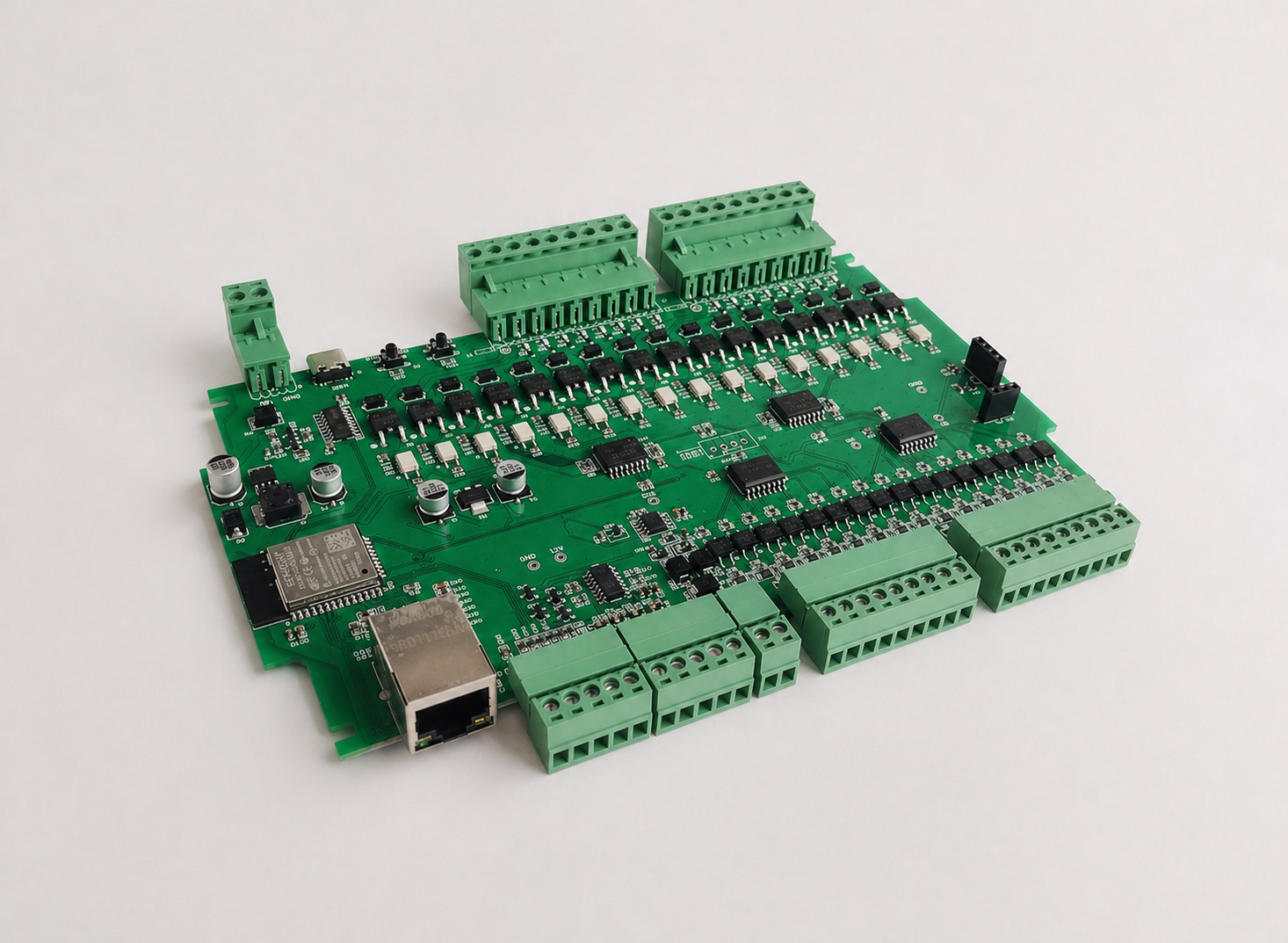
The COBALT module establishes the communication interface with the Accelero system, from which it receives the information about authorized users, driving the digital outputs according to the floor permissions configured in the system.
The hardware was designed for continuous operation, focusing on reliability and electrical safety, and is equipped with protection circuits against electrostatic discharge, voltage surges, and electromagnetic interference, which allows it to be installed in industrial and building environments.
Network communication can be established through a wireless interface (Wi-Fi) or through a wired Ethernet UTP 10/100-Base-T connection, enabling different installation topologies according to the available infrastructure.
The module features an embedded HTTP server through which the operational settings, network parameters, and system adjustments are configured, accessible from a web browser.
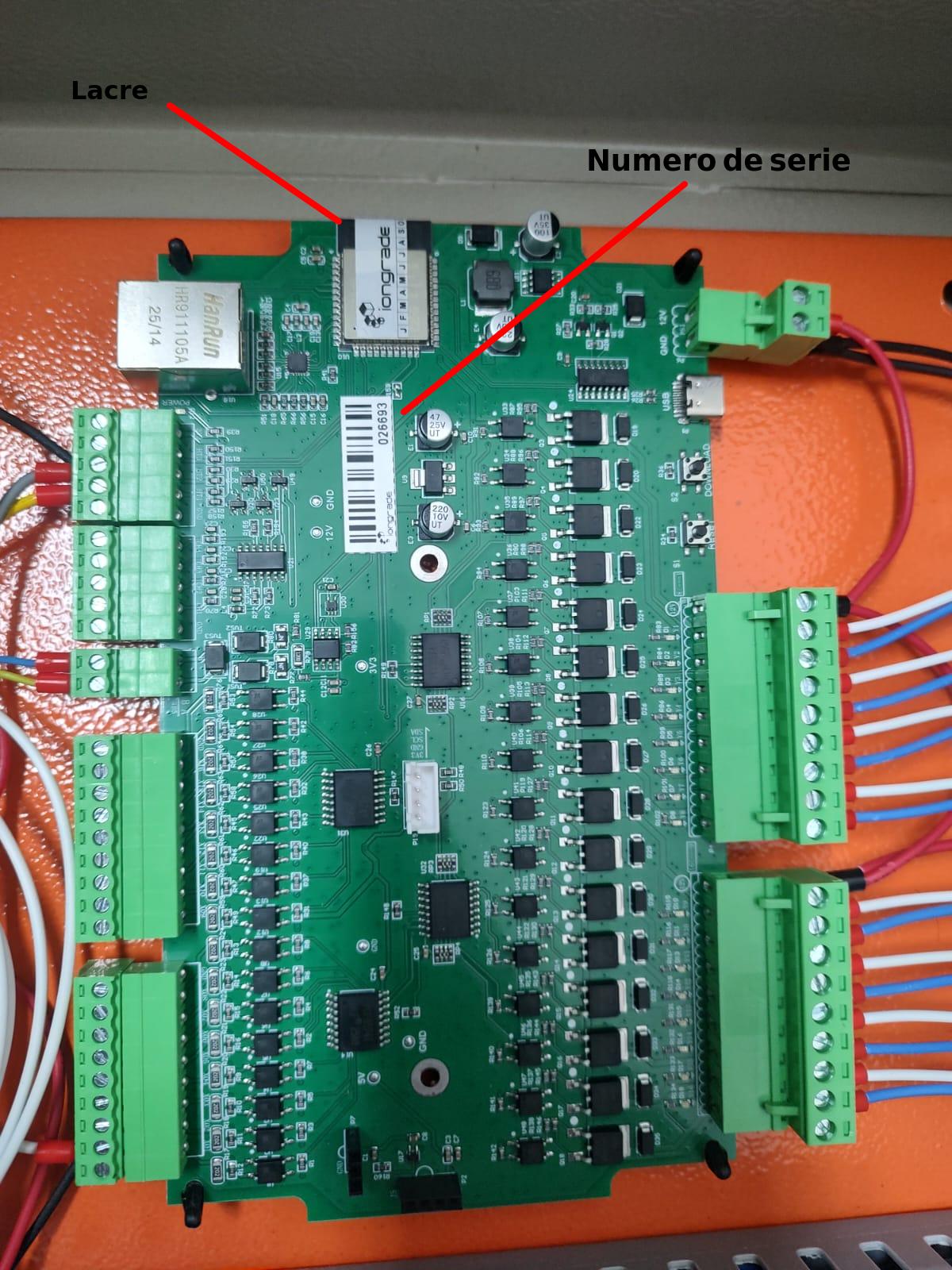
How Button Panel Control Works
The button panel is controlled through 16 built-in digital outputs, intended to command external relays, which perform the electrical actuation of the elevator circuits.
Each digital output supplies 12 Vdc to drive the corresponding external relay, which electrically switches the circuit of the elevator floor button.
Main and Subordinate Architecture
COBALT operates in a distributed architecture made up of a Main board and, when needed, Subordinate expansion boards.
| Board role | Communication | Function |
|---|---|---|
| Main | Wi-Fi or Ethernet | Responsible for communicating with the Accelero system and for managing the other modules. Identifies the authorized floor and, when needed, sends the command to the Subordinate boards. |
| Subordinate | RS485 | Output expansion unit, under the control of the Main board. Receives the actuation commands over the RS485 bus. |
The board role is defined by the type of communication media configured: when communication is set to Wi-Fi or Ethernet, the module is automatically defined as the Main board; when set to communicate over RS485, the module operates as a Subordinate board.
RS485 Expansion
The module has an RS485 communication interface for system expansion, allowing up to three additional modules to be connected to the Main board.
This makes it possible to expand the system to up to 64 digital outputs, enabling control of up to 64 floors or actuation points, while preserving the distributed architecture and the integrity of communication in industrial environments.
COBALT-QD Family
COBALT is supplied in the QD family, which varies according to the number of boards and digital outputs:
| Model | Boards | Digital outputs |
|---|---|---|
| COBALT-QD16 | 1 | 16 |
| COBALT-QD32 | 2 | 32 |
| COBALT-QD48 | 3 | 48 |
| COBALT-QD64 | 4 | 64 |
This documentation uses the COBALT-QD32 model as its reference. Each board in the set provides 16 digital outputs; the boards are interconnected through the RS485 bus, following the Main/Subordinate standard.
Communication
COBALT communicates with the network and with the control system through:
- Wi-Fi (wireless)
- Ethernet UTP 10/100-Base-T (RJ45 connector)
- MQTT — communication with the server (Broker), through Accelero Cloud or a custom MQTT broker
- RS485 — internal bus for expansion between Main and Subordinate boards
Technical Specifications
| Specification | Value |
|---|---|
| Type | I/O module (current application: elevator button panel control) |
| Reference model | COBALT-QD32 |
| Family | QD16 / QD32 / QD48 / QD64 (1 to 4 boards) |
| Power supply | 12 Vdc (external power supply, 12V and GND terminals) |
| Digital outputs | 16 per board (12 Vdc to drive external relays) |
| Expansion | RS485 — up to 3 additional modules → up to 64 digital outputs / up to 64 floors |
| Reader interface | READER — Wiegand protocol access control readers (D0 and D1 signals) |
| Signal input | Input/Emergency (active on low logic level) |
| Network communication | Wi-Fi and Ethernet RJ45 10/100-Base-T |
| Server protocol | MQTT (Accelero Cloud or custom broker) |
| Configuration server | Embedded HTTP, accessible from a web browser |
| Electrical protections | Electrostatic discharge, voltage surges, and electromagnetic interference |
| Clock/calendar | Internal clock with optional synchronization through an external NTP server |
| Accelero compatibility | Accelero platform version 2.16.9-HF3 or higher |
Next Steps
- Elevator Button Panel Control — the feature in Accelero: release rules, use cases, and limits
- Installation Manual — power supply, QD32 terminal block, buttons, and Main/Subordinate definition